Slab Leak Detection & Repair in Fort Lauderdale, FL
Fort Lauderdale's canal-laced neighborhoods and mid-century homes come with a hidden plumbing risk: copper water lines buried in concrete slabs, sitting in some of the wettest ground in Florida. From Las Olas and Victoria Park to Coral Ridge and Wilton Manors, Slab Leak Detection Pros provides same-day slab leak detection across the Fort Lauderdale area — locating under-slab leaks precisely, without exploratory demolition. Because local homes are built slab-on-grade with no basement, a leaking supply line hides in the concrete; the first warnings are typically a water bill that keeps climbing or a warm spot on the tile. Our technicians use pressure testing, acoustic listening, and thermal imaging to pinpoint leaks within inches, and every visit ends with a photo-documented report your plumber or insurance adjuster can use. If you hear water running when every faucet is off, call (877) 762-1902 — in Fort Lauderdale's humidity, a hidden leak becomes a mold problem fast.
Neighborhoods We Serve in Fort Lauderdale
Las Olas, Victoria Park, Coral Ridge, Harbor Beach, Rio Vista, Wilton Manors, Oakland Park, Lauderdale-by-the-Sea, Davie, Plantation — and every ZIP code in between.
Why Fort Lauderdale Homes Get Slab Leaks
Fort Lauderdale has one of the highest water tables in Florida — in canal and low-lying neighborhoods, groundwater can sit just a couple of feet below the surface, keeping slab foundations in near-constant dampness. The saturated, mineral-rich sandy soil holds moisture against buried copper, and coastal salt influence makes the soil chemistry especially aggressive toward it. Seasonal saturation from tropical systems and king tides shifts the ground around slabs, stressing rigid copper joints, while hard municipal water pits the pipes from the inside — a two-front corrosion attack.
Signs of a Slab Leak in Fort Lauderdale Homes
In Fort Lauderdale, a slab leak almost never looks like a leak at first — the concrete slab absorbs the water and tile floors hide the rest, so the evidence arrives indirectly. The most reliable early sign is financial: water bills that climb steadily with no change in your household are the classic first clue, and a moderate under-slab leak can waste thousands of gallons a month long before anything looks wet. The second signature symptom is a warm spot on the floor — hot-water lines run through the slab, and when one leaks, the escaping water heats the surrounding concrete. Walk barefoot across the tile in your Victoria Park ranch or your Coral Ridge home; a patch that feels clearly warmer than the rest is diagnostic. Third, listen with the house quiet: hissing or the sound of running water at floor level when every fixture is off is a strong indicator. Fourth, watch the room edges — damp carpet along baseboards, grout that stays dark, a musty smell concentrated in one room, or paint bubbling near the floor. In Fort Lauderdale's canal neighborhoods — Rio Vista, Harbor Beach, Lauderdale-by-the-Sea — the water table can sit just a couple of feet below the surface, so moisture wicks readily and a persistent musty smell with no visible water is reason enough to investigate. One local wrinkle: many waterfront homes have pool auto-fills and irrigation tied into the main line, so rule those out before assuming a slab leak. But tile floors, which dominate Fort Lauderdale homes, hide early damage beautifully — by the time tile tents or grout crumbles, the leak is often months old. Two or more of these signs together means professional detection, not guesswork.
What to Do When You Suspect a Slab Leak
Suspect a slab leak? In Fort Lauderdale, the right sequence protects your floors, your wallet, and any future insurance claim. First, verify with the meter test: shut off every faucet, toilet, appliance, irrigation zone, and pool auto-fill, then watch your water meter for ten to fifteen minutes. If the dial or leak indicator moves, water is escaping the system. Second, rule out the easy impostors — a running toilet, a stuck ice maker, or that pool auto-fill can all mimic a slab leak's water-bill symptoms. Third, document with dated photos: the meter reading, any damp baseboards, warm floor spots, musty areas, or cracked grout. If a claim follows, this timeline matters. Fourth, and critically: don't let anyone break concrete on a guess. Fort Lauderdale's 1970s-80s slabs sometimes contain post-tension cables, and cutting one turns a plumbing repair into a structural emergency; even in conventional slabs, blind excavation destroys expensive tile over a leak that might be rooms away. Fifth, call for professional detection: (877) 762-1902. We'll pressure-test, listen acoustically, and scan thermally — usually the same day — and mark the exact spot on your floor. Sixth, get the repair quoted flat and in writing, with the pipe fix, concrete patch, and flooring restoration itemized separately. Treat a confirmed leak as urgent but orderly: in Fort Lauderdale's humidity and high water table, sustained moisture can seed mold within days, so days matter — but a detection visit first means the repair crew opens the slab exactly once, in exactly the right place.
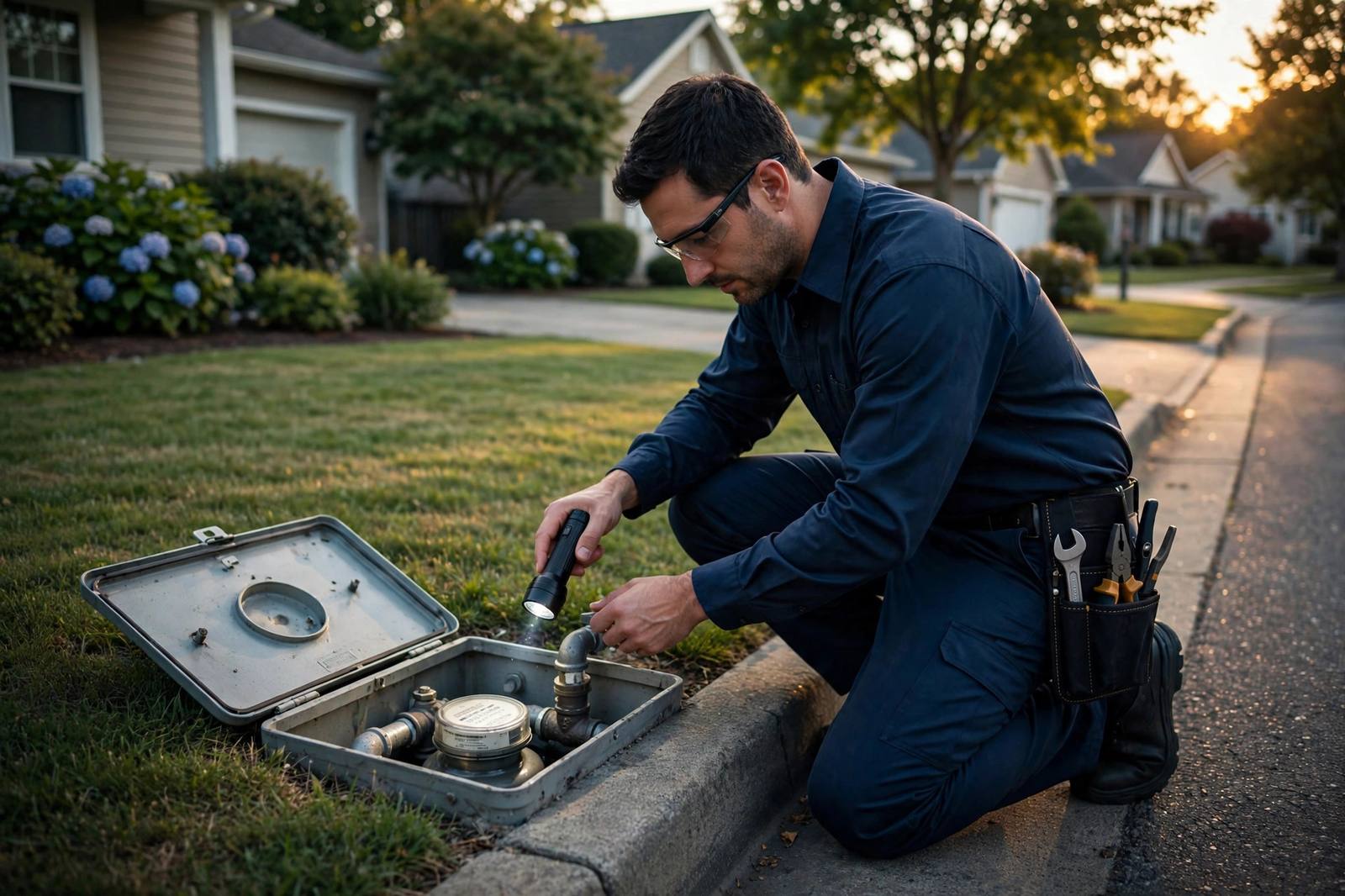
Why Fort Lauderdale Homes Get Slab Leaks
Fort Lauderdale's slab leak problem is driven by water — in the ground, in the pipes, and in the air. Start with the ground: this is one of the highest-water-table metros in Florida. In canal neighborhoods like Rio Vista and Harbor Beach, and in low-lying parts of Oakland Park and Lauderdale-by-the-Sea, groundwater can sit just a couple of feet below the surface, which means copper lines in the slab live in near-constant dampness. Saturated, mineral-rich soil holds moisture against the pipe's exterior, and in coastal zones the soil carries salts that are especially aggressive toward copper. Then the water inside the pipe: Fort Lauderdale's municipal supply is hard and mineral-heavy, and over decades it pits copper from within — pitting corrosion that starts as microscopic dark spots and eventually becomes pinholes. A pipe being attacked from both sides doesn't get a full lifespan. Then the housing stock: enormous stretches of Victoria Park, Coral Ridge, Wilton Manors, and Plantation were built from the 1960s through the 1980s with copper poured directly into the slab. Those lines are now 40 to 60 years old — right at the age where pinhole leaks shift from isolated incidents to a pattern. Finally, the weather: tropical systems and king-tide flooding periodically saturate the ground in hours, shifting soil around foundations, and the region's wet-dry seasonal rhythm keeps the sandy ground in slow motion around the slab. Rigid copper joints don't flex with that movement; they fatigue until one fails. Homes from the 1990s onward with PEX or sleeved copper largely escape this cycle — but if your Fort Lauderdale home predates about 1990 with original lines, the question is when, not if.
How We Detect Slab Leaks in Fort Lauderdale
Our Fort Lauderdale visits follow a strict locate-first protocol — no exploratory demolition, ever. We begin with a static pressure test, isolating the hot and cold systems to determine which side is losing pressure and how quickly. That one test tells us whether we're hunting a supply leak or a drain problem, and it rules out roughly half the plumbing in minutes. Next, acoustic listening: our technician sweeps the slab with a sensitive ground microphone that picks up the high-frequency hiss of pressurized water escaping through concrete. Fort Lauderdale's residential streets — the quiet blocks of Victoria Park, the suburban stretches of Plantation and Davie — offer clean listening conditions, and a trained ear distinguishes a slab leak's signature from normal pipe noise, AC condensate drips, and appliance hums. Then thermal imaging: an infrared camera maps the slab's surface temperature, and a hot-water leak shows as a warm bloom spreading outward from the break — particularly readable in Fort Lauderdale's tile-heavy homes, where tile conducts heat well. For cold-water or drain leaks that don't show heat, we use tracer gas: a safe, inert hydrogen-nitrogen blend introduced into the line that escapes at the break and rises through the concrete, where a sensitive sniffer locates it. Finally, accessible drain lines get a camera inspection — relevant in Wilton Manors and Victoria Park where aging cast-iron drains are common. Most Fort Lauderdale visits wrap up in one to two hours, and you get the leak marked on your floor, dated photos, and a written report ready for your plumber or your insurance adjuster.
Slab Leak Repair Options in Fort Lauderdale
Once the leak is pinpointed, Fort Lauderdale homeowners typically choose between three repair approaches, and the honest answer depends on pipe age, leak history, and budget. Option one is the spot repair: at the marked location we open a small, precise section of slab — usually about two feet square — cut out the failed pipe section, and splice in new copper or PEX. For a first leak in an otherwise healthy system, including 2000s-era homes in Plantation and Davie, this is typically the right call: lowest cost, least disruption. The candid trade-off is that in 40-plus-year-old copper, the next weak spot may fail a year or two later. Option two is the reroute: new PEX lines run through the attic and interior walls, bypassing the under-slab plumbing entirely. Fort Lauderdale's single-story ranches in Coral Ridge, Victoria Park, and Wilton Manors have accessible attics, making reroutes straightforward — and for homes with original 1960s-80s copper and a history of leaks, a reroute ends the slab-leak cycle permanently. It costs more upfront but buys decades without another slab opening. Option three addresses drain-side leaks: epoxy lining or sectional repairs for deteriorating cast-iron drains under the slab, a recurring need in mid-century Wilton Manors and Victoria Park homes. One Fort Lauderdale-specific caution: the high water table means an opened slab can weep groundwater during repair, so proper dewatering and sealing at the patch matters — a detail experienced local crews handle and out-of-town outfits sometimes miss. Every repair is quoted flat and in writing, with the pipe fix, concrete patch, and flooring restoration itemized separately.
What Slab Leak Detection & Repair Costs in Fort Lauderdale
In the Fort Lauderdale market, professional slab leak detection typically runs $150 to $450. Most single-family homes in neighborhoods like Oakland Park, Wilton Manors, or Davie land in the middle of that range; larger waterfront homes in Harbor Beach or Coral Ridge with multiple baths, pool lines, or guest quarters trend toward the top because every branch must be tested. Repairs vary more widely. A straightforward spot repair — open the slab at the marked spot, fix the pipe, patch the concrete — typically costs $2,200 to $7,000 in the Fort Lauderdale area, with the range driven by pipe depth, hot versus cold line, and the cost of restoring tile over the patch. A full hot-and-cold PEX reroute through the attic generally runs $3,500 to $10,000 for a typical single-story home — the popular long-term fix for the area's 1960s-80s copper systems. Drain-side repairs under the slab are the broadest variable: $3,000 to $12,000-plus depending on the length of failing pipe and access conditions. Two costs Fort Lauderdale homeowners consistently underestimate: the water itself, where a moderate leak can add thousands of gallons to the monthly bill, and mold — in this humidity, with this water table, sustained moisture can start growing within 48 hours. On insurance, Florida policies often cover the resulting water damage and the cost of accessing the leak even when the pipe repair is excluded as wear and tear; our photo-documented detection reports are written to support those claims. We quote every repair flat, in writing, before work begins — no surprises.
Get a Pinpoint Diagnosis in Fort Lauderdale
No jackhammer guesswork. Thermal imaging + acoustic equipment finds your leak within inches.
☎ Call (877) 762-1902Fort Lauderdale Slab Leak FAQs
How do I know if I have a slab leak in Fort Lauderdale?
The meter test is the quickest check: shut off every fixture and irrigation zone, then watch the dial for ten minutes — if it moves, water is escaping. Classic signs are a climbing water bill, a warm patch of tile, hissing sounds with everything off, damp baseboards, and musty odors. Professional acoustic and thermal detection then confirms whether the leak is under the slab.
Why are slab leaks so common in Fort Lauderdale?
Fort Lauderdale has one of the highest water tables in Florida — in canal neighborhoods the groundwater can sit just a couple of feet down — so buried copper lives in near-constant dampness. Combine that with hard, mineral-heavy water pitting pipes from the inside, salt-influenced soil attacking from the outside, and a huge stock of 1960s-80s homes whose original copper is now aging out, and leaks are common.
Does slab leak detection tear up my floors?
Detection is entirely non-invasive: pressure testing, acoustic microphones, thermal imaging, and tracer gas, all performed from the surface. We open flooring only at the repair stage, and only in a small, precise patch at the confirmed leak location. During detection itself, nothing is cut, drilled, or broken.
Spot repair or reroute — which makes more sense?
For a first leak in younger plumbing, a spot repair is usually the economical choice. But in a 1960s-80s Fort Lauderdale home with original copper — common in Victoria Park, Coral Ridge, and Wilton Manors — repeat leaks are the pattern, and a PEX reroute through the attic costs more now while ending the cycle permanently. We quote both options flat and in writing.
Will my homeowner's insurance cover a slab leak?
Often in part. Florida policies commonly cover the resulting water damage and the cost of accessing a leak, while excluding the corroded pipe as wear and tear. Our reports include dated photos and the confirmed leak location — exactly what adjusters need. Review your policy's plumbing and foundation exclusions before filing.
How long does slab leak detection take?
Most Fort Lauderdale homes take one to two hours from arrival to a marked, photo-documented leak location. Waterfront homes with pool lines tied into the main, or multi-bath homes in Harbor Beach and Coral Ridge, can take a little longer. Same-day service is standard — call (877) 762-1902.
Nearby Cities
Keep Learning
Selling a House With a Slab Leak: Disclosure & Value
Selling a house with a slab leak? Learn disclosure rules, how leaks affect home value, repair-vs-as-is math, and the paperwork tha…
7 Signs of a Slab Leak Every Homeowner Should Know
Spot a slab leak before it destroys your foundation. The 7 warning signs — high water bills, hot spots, cracks — plus what to do n…
How Much Does Slab Leak Detection Cost in 2026?
Slab leak detection costs $150-$600 in 2026. Compare per-method pricing, what's included in a proper visit, cost factors, and how …