Slab Leak Detection & Repair in St. Petersburg, FL
Few Florida cities have a housing stock as layered as St. Petersburg's. The Old Northeast and Snell Isle hold gracious homes from the 1920s and 30s, mid-century ranch neighborhoods stretch across the mainland, and waterfront properties along Tampa Bay sit on fill that has been settling for decades. What they share is the slab-on-grade foundation — basements are virtually nonexistent here — with water lines that have been running under concrete for a very long time. In the historic districts, original copper and galvanized piping is often 60, 80, even 100 years old, far past its design life. Our technicians work daily across St. Petersburg — from Kenneth City to Lakewood Estates, from Coquina Key to Tierra Verde — with acoustic and thermal detection that locates the break without guesswork and without tearing up your floors. If your St. Pete home shows any sign of a slab leak, call (877) 762-1902. Same-day appointments and free on-site inspections are available throughout the 33701 through 33716 ZIP codes.
Neighborhoods We Serve in St. Petersburg
Old Northeast, Snell Isle, Shore Acres, Downtown St. Pete, Gulfport, Tierra Verde, Kenneth City, Lakewood Estates, Coquina Key, Maximo — and every ZIP code in between.
Why St. Petersburg Homes Get Slab Leaks
St. Petersburg sits on a peninsula of sandy, shelly soils over limestone, with the water table often just a few feet below the surface — higher during the rainy season and after tropical storms. Waterfront neighborhoods in particular rest on dredged fill that keeps settling unevenly long after construction. When soil shifts or washes out beneath a slab-on-grade foundation, the slab flexes and the copper or galvanized lines inside it flex too. Repeated cycles of saturation and drying, plus the stress of hurricane-season storm surge, are a slow-motion assault on aging under-slab plumbing.
Why St. Petersburg Homes Get Slab Leaks
The age of the plumbing is the headline story in St. Petersburg. In the Old Northeast, Snell Isle, and Shore Acres, many homes still carry the water lines they were built with — copper and galvanized steel installed between the 1920s and the 1950s. Copper is a fine material, but it is not immortal, and galvanized steel is notorious for corroding from the inside out. After 60-plus years, these lines develop pitting and thin spots that become pinholes under normal pressure, and there is no visible warning because the failure happens underground, inside the slab fill. The city's water chemistry accelerates the decline. Like much of Florida, St. Pete's water is hard and mineral-laden, and over decades that chemistry works on copper walls the way weather works on a coastline — slowly, then all at once. The second factor is geography. St. Petersburg is a peninsula surrounded on three sides by water, with a water table that sits high year-round and rises further during the rainy season and tropical storms. The sandy, shelly soils beneath the city's slabs shift as water moves through them, and waterfront homes in places like Tierra Verde, Coquina Key, and Snell Isle often sit on dredged fill that continues to settle unevenly decades after placement. That settlement moves the slab in small increments, and the pipes inside the slab move with it — until a joint or a weakened section gives. Storm history matters too. Hurricanes and tropical storms saturate the ground, then the dry season shrinks it back, and each cycle works the foundation slightly. Finally, there is the simple matter of time meeting Florida construction norms: slab-on-grade with lines under the concrete means every one of these aging systems is one pinhole away from leaking into the soil beneath your home. In a St. Pete bungalow with original 1940s copper, a slab leak is simply the expected failure mode.
Signs of a Slab Leak in St. Petersburg Homes
In St. Pete, slab leaks announce themselves in ways that are easy to misread in an old house. The water bill is the most honest indicator: if usage climbs month after month while your household routine stays the same, and the meter keeps turning with every fixture off, you are losing water underground. Warm floors are the second tell, and they are especially noticeable here because so many St. Pete homes have tile throughout — tile conducts heat so well that a hot-water line leak shows up as an unmistakable patch of warmth in a hallway or living room. Homeowners in the Old Northeast often notice it first in socks on the way to the kitchen. A third sign is sound: stand in the house late at night and listen for a faint hiss or trickle that has no source. With everything off, a healthy plumbing system is silent; a leaking line under the slab is not. Dampness follows — baseboards that stay slightly damp, carpet that never quite dries in one spot, or a musty smell that returns no matter how often you clean. In Gulfport and Maximo, where some homes sit close to the water table, a slab leak can also show up outside first, as a persistently wet patch near the foundation or an inexplicably lush patch of grass. Cracks in tile or drywall that appear suddenly, and a water heater that kicks on far more often than it used to, round out the picture. St. Pete homeowners sometimes chalk these up to the quirks of an old house or the humidity, but that instinct is exactly what lets a small pinhole run for months. Any one of these signs deserves a pressure test and an acoustic check — catching it early is the difference between a one-day spot repair and a multi-thousand-dollar water-damage job.
How We Detect Slab Leaks in St. Petersburg
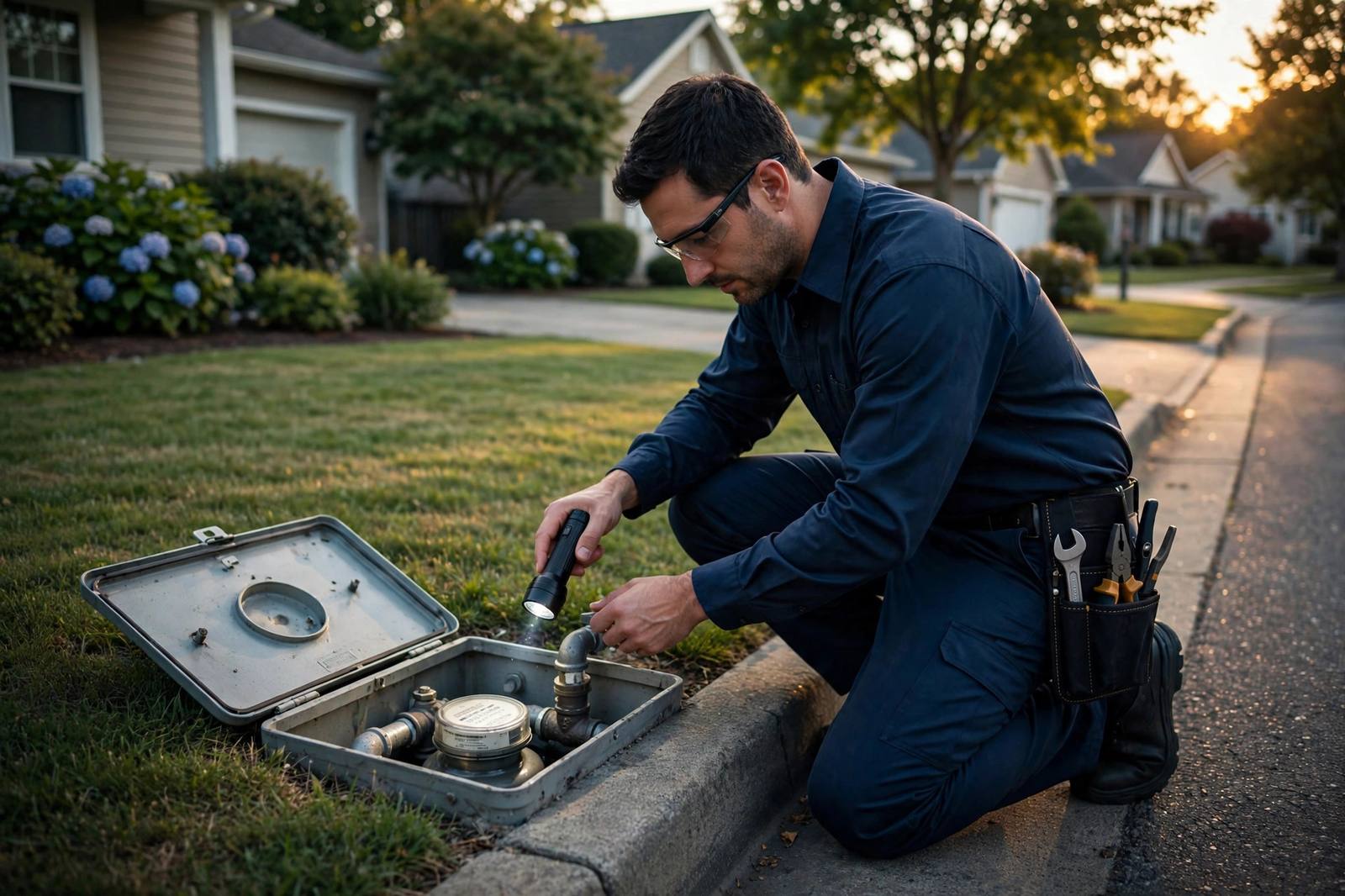
We treat detection as a diagnostic discipline, not guesswork, and in St. Pete's varied housing stock that discipline matters. The visit starts with your observations — the bill, the warm tile, the sound — because those details tell us which side of the system to test first. We then run a meter isolation test: everything off, watch the meter. Movement means water is leaving the system somewhere it should not be. Next, we pressure-test the hot and cold lines separately. This is particularly useful in the historic districts, where plumbing layouts can be unusual — additions built in the 70s tied into 1920s originals, lines that loop in unexpected ways. Knowing which branch loses pressure narrows the search dramatically. Then comes acoustic detection. A pressurized leak under the slab produces a distinctive sound as water forces its way into soil or concrete, and ground microphones pick it up through tile, terrazzo, and slab. Many St. Pete homes have terrazzo or tile floors, both of which transmit sound well, which helps us triangulate within a couple of feet. For hot-side leaks we layer in thermal imaging: an infrared camera reads floor-surface temperatures and reveals the warm plume spreading from the break, often drawing a clear picture of the leak's path. In trickier cases — a home in Lakewood Estates or Kenneth City with multiple remodels and rerouted lines — we introduce tracer gas into the isolated line. The gas escapes only at the breach, rises through the slab, and is picked up by a sensitive detector at the surface. The full diagnostic usually takes one to two hours and involves no demolition whatsoever. You receive a written finding: which line failed, where the break is, and what your repair options are. Only after you approve a plan does any concrete get opened. Call (877) 762-1902 — same-day appointments are available across St. Petersburg.
What Slab Leak Detection & Repair Costs in St. Petersburg
Detection in St. Petersburg typically runs $175 to $500, with most single-family homes landing in the middle of that range. The visit covers meter and pressure testing plus acoustic or thermal location, and the fee is usually credited if we do the repair. Repairs depend on the approach. A spot repair — opening a small, targeted section of slab at the located break and splicing in new pipe — generally costs $2,500 to $7,500 in this market. The low end covers an accessible break in a garage or utility area; the high end covers leaks under finished living space in homes where concrete cutting and restoration of tile or terrazzo add significant labor. A reroute — abandoning the failed line and running new pipe through the attic or walls — often falls in a similar range and is a favorite for homes where the homeowner wants to avoid slab work entirely. For a St. Pete bungalow or mid-century ranch with original galvanized or copper that has already leaked more than once, we will often recommend a full repipe rather than another spot repair, because each patch leaves the next weak section waiting to fail. A whole-home repipe generally runs $7,000 to $16,000 depending on size, fixture count, and material. Several local realities affect pricing: waterfront homes in Snell Isle or Tierra Verde may have lines run through fill that complicates access; historic homes sometimes require extra care with plaster walls during reroutes; and larger estates simply have more footage of pipe. What you should always get is a written estimate before work begins, a plain-English explanation of why a particular method was recommended, and documentation for your insurance carrier. We provide all three, and we will tell you honestly when a spot repair is enough and when your money is better spent repiping. Call (877) 762-1902 for a free inspection and an exact quote.
Slab Leak Repair Options in St. Petersburg
There are three standard ways to fix a slab leak, and the right one for a St. Pete home depends on the system's age, the leak's location, and how the house is built. The first is a spot repair. Once acoustic and thermal detection have pinpointed the break, we open a small section of slab at that exact point, cut out the damaged length of pipe, and splice in new material. Spot repairs suit homes where the rest of the plumbing is sound — for example, a single pinhole in a 1980s ranch in Shore Acres whose lines are otherwise healthy. The job typically finishes in a day, and we restore the concrete and flooring. The second option is a reroute. Instead of opening the slab, we abandon the leaking line in place and run a brand-new pipe through the attic or inside walls to the same fixtures. Reroutes are extremely popular in St. Petersburg's older neighborhoods — Old Northeast bungalows with beautiful original tile floors, Snell Isle estates where the homeowner would rather not disturb terrazzo — because they leave the slab and the finishes completely alone and put the new line where any future issue is easy to reach. The third option is a full or partial repipe. For a home with 1940s galvanized or 1960s copper that has already sprung two leaks, patching is a losing game: every repair leaves the remaining aged pipe to fail next. A repipe replaces the under-slab system with new PEX or copper run overhead or through walls, ending the cycle. It costs more upfront but is often the cheapest option over five years. We also handle the messy parts — permits where required, concrete restoration, and the insurance paperwork with photos and pressure logs. Whatever the method, the goal is the same: a permanent fix that respects the character of your St. Pete home while ending the leak for good.
What to Do When You Suspect a Slab Leak
Start with the meter test, which costs nothing and takes twenty minutes. Turn off every tap, make sure no appliances are running, and watch your water meter for 15 to 30 minutes. A moving dial means water is escaping the system. Second, walk your floors barefoot. St. Pete homes are full of tile and terrazzo, and both conduct heat well, so a warm patch in a hallway or living room is one of the most reliable signs a homeowner can detect of a hot-line leak under the slab. Third, do a late-night listen: with the house silent, stand in different rooms and listen for the faint hiss or trickle of water with no fixture running. Fourth, look low — check baseboards, the bottoms of drywall, and carpet edges for dampness, staining, or a musty smell that keeps returning. If any of these raise a flag, do not start pulling up flooring or opening walls yourself. Professional acoustic and thermal equipment locates the break within a couple of feet; a wrong guess at demolition costs far more than the detection visit. While you wait for the technician, shut the main water valve if water is visibly surfacing or the leak seems severe — the valve is usually near the meter or where the line enters the house. Take photos of any damp spots, stains, or cracks; they help the technician and support an insurance claim. Then call (877) 762-1902. We offer same-day appointments from Downtown St. Pete to Tierra Verde, from Gulfport to Lakewood Estates, and our inspections are free. Slab leaks get more expensive every week they run — soil erodes, damage spreads, and the repair grows. Treat your suspicion as worth checking today.
Get a Pinpoint Diagnosis in St. Petersburg
No jackhammer guesswork. Thermal imaging + acoustic equipment finds your leak within inches.
☎ Call (877) 762-1902St. Petersburg Slab Leak FAQs
How much does slab leak detection cost in St. Petersburg?
Detecting a slab leak in a St. Petersburg home typically costs $175 to $500, including meter and pressure testing plus acoustic or thermal location of the break. If we perform the repair, the detection fee is generally credited toward the final invoice.
Why do older St. Pete homes get so many slab leaks?
In the historic districts especially, original 1920s to 1950s copper and galvanized lines are the norm, and many have simply worn out. Even in newer sections, the city's high water table and corrosive water chemistry shorten pipe life well below their expected lifespan.
Can you fix a slab leak without breaking the floor?
In many cases, yes. A reroute runs a new line through the attic or walls and abandons the failed pipe under the slab, so no concrete is cut. Spot repairs need only a small, targeted opening that we restore afterward.
Does homeowners insurance cover slab leaks in Florida?
Commonly covered: tear-out and access costs plus resulting water damage. The pipe repair itself depends on the policy and cause. We photograph and document every job to make filing a claim in St. Petersburg as smooth as possible, at no extra charge to you.
How long does slab leak repair take in St. Petersburg?
Most spot repairs and reroutes finish in a single day. Detection takes one to two hours. A full repipe on a typical St. Pete bungalow or ranch usually runs two to four days, scheduled around your household routine. We protect floors and clean up daily.
Do you offer same-day slab leak service in St. Petersburg?
Absolutely. We serve the whole city same-day — Old Northeast, Snell Isle, Shore Acres, Downtown St. Pete, Gulfport, Tierra Verde and beyond. Call (877) 762-1902 and we will get you on the schedule as fast as possible. Evening and weekend appointments are available too.
Nearby Cities
Keep Learning
Can a Slab Leak Cause Mold? Health Risks Explained
Can a slab leak cause mold? Yes — often hidden. Learn the EPA 24-48 hour growth window, health risks, warning signs, and the right…
Copper Pinhole Leaks Under Slabs: Repair or Repipe?
Copper pinhole leaks under your slab: what causes pitting corrosion, repair vs repipe costs, and how to decide. Real numbers for f…
Does Homeowners Insurance Cover Slab Leaks?
Does homeowners insurance cover slab leaks? Usually the water damage, not the pipe itself. What's covered, exclusions, claim tips,…