Slab Leak Detection & Repair in San Antonio, TX
San Antonio pairs two of the toughest conditions for buried plumbing in Texas: some of the hardest water in the state and expansive clay soils that never sit still. Decades of mineral-heavy water flowing through copper lines have left thousands of 1970s, 1980s, and 1990s homes with pinhole leaks waiting to happen, from Stone Oak to Castle Hills to the Medical Center area. At the same time, the clay soils across the metro swell with spring storms and shrink through the long dry summers, flexing every joint under your slab. Our technicians provide same-day slab leak detection throughout San Antonio using acoustic listening, thermal imaging, and tracer gas to pinpoint failures within inches. Whether your home sits on the limestone edge near the Hill Country or deep in the clay flats of the South Side, you get a written diagnosis, flat-rate pricing, and repair options matched to your plumbing's age and your flooring's value. A jumping water bill or a warm spot on the tile is your early warning. In San Antonio, acting on it quickly is the difference between a one-day repair and a flooring replacement.
Neighborhoods We Serve in San Antonio
Alamo Heights, Stone Oak, Monte Vista, Olmos Park, Terrell Hills, King William, Shavano Park, Castle Hills, Hollywood Park, Medical Center — and every ZIP code in between.
Why San Antonio Homes Get Slab Leaks
San Antonio's soils range from expansive clays across the south and east to Edwards limestone along the northern Hill Country edge. The clays swell with seasonal rains and shrink in the long dry summers, heaving slabs and stressing buried joints twice a year. Combined with some of the hardest municipal water in Texas, which pits copper from the inside, the metro delivers a double assault: chemical attack on the pipe wall plus mechanical flexing from the soil.
Hard Water and Clay: San Antonio's Double Threat
If you ask San Antonio plumbers what kills copper here, the answer comes fast: the water. San Antonio's Edwards Aquifer supply is famously hard, loaded with calcium and magnesium, and while it is fine to drink, decades of it coursing through thin-wall copper pipe is brutal. Mineral content drives a specific failure called pitting corrosion, where tiny pits eat through the pipe wall from the inside until pinholes open. Homes plumbed during the 1970s, 1980s, and early 1990s boom are now forty to fifty years into that process, which is why Stone Oak, Castle Hills, Shavano Park, and the Medical Center area generate so many pinhole calls. The soil adds a second assault. Much of San Antonio sits on expansive clay that heaves with wet seasons and settles in drought, flexing joints and stressing already-thinned pipe walls. Near the northern edge, the geology shifts to Edwards limestone, which is more stable but brings its own issue: rocky trenches where installers sometimes laid pipe against sharp stone without proper bedding, creating abrasion points. Water chemistry plus soil movement is a one-two punch, and it explains why San Antonio sees slab leaks in homes that look too young for plumbing failure. If your home still runs its original copper and the water leaves heavy scale on fixtures, your under-slab lines deserve proactive attention before they announce themselves with a bill spike.
Pinpoint Detection for Pinhole Leaks in San Antonio
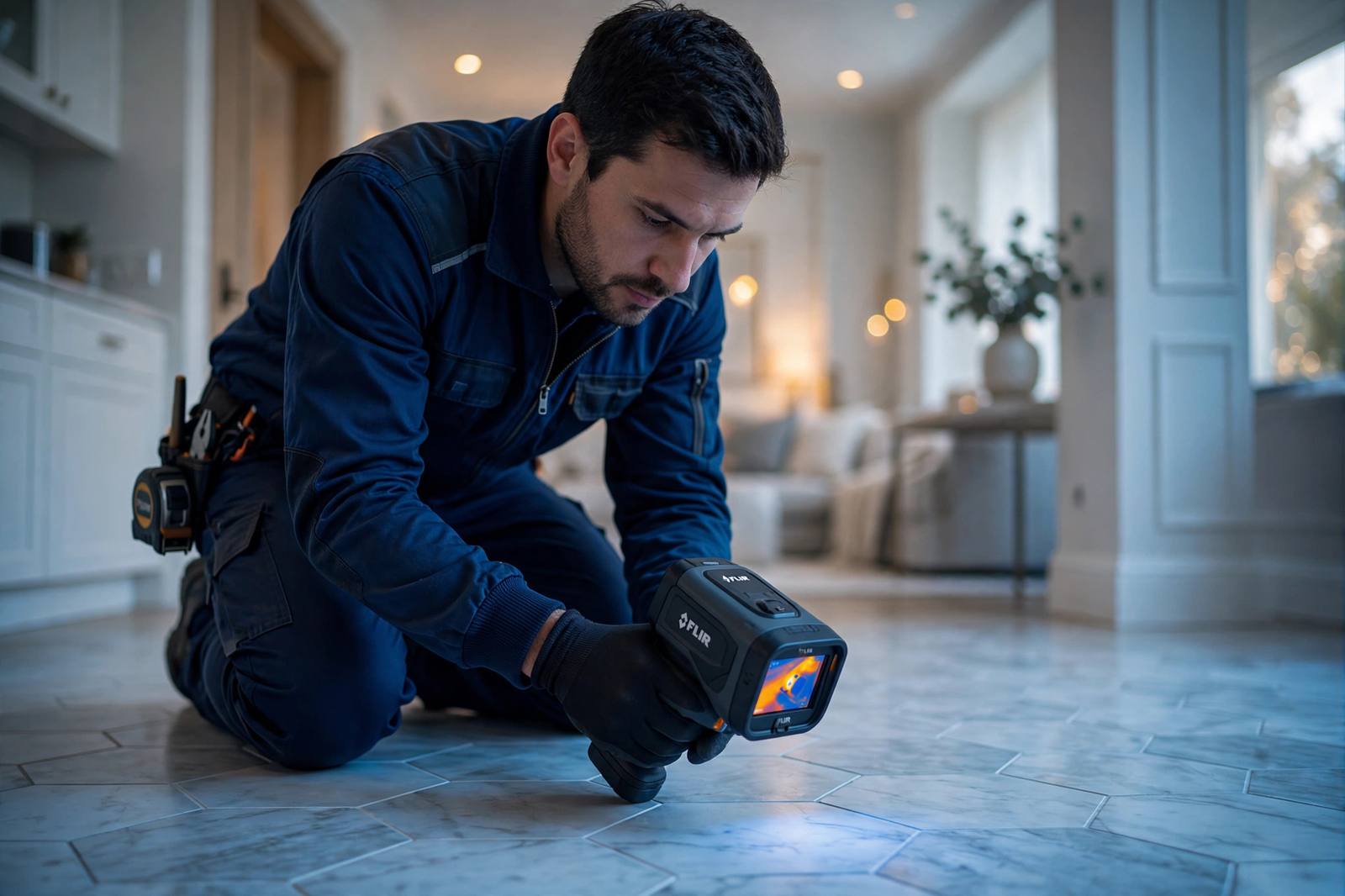
Our San Antonio detection process is built to find pinholes, not just gushers. It begins at the water meter with the whole house shut down. A creeping meter dial confirms a pressurized leak, and isolating the water heater reveals whether the failure is hot-side or cold-side, which immediately halves the search. Acoustic listening follows. Pinhole leaks produce a faint, high-pitched hiss that sensitive ground microphones can pick up through slab and tile, and our technicians are trained to distinguish that signature from normal system noise. Thermal imaging cameras then sweep the floors; hot-water pinholes bloom as warm patches on tile, a fast visual confirmation. Because San Antonio pinholes can be tiny, we lean heavily on tracer gas for final pinpointing. The suspect line is drained and filled with a safe hydrogen-nitrogen mix, and a sniffer detects the precise escape point, often within a couple of inches, even under thick slabs. Pressure testing each line segment locks in the diagnosis. The visit runs one to two hours and produces a written report with the marked location, thermal images, and a flat repair quote. That documentation is valuable well beyond the repair itself: insurers, home warranty companies, and buyers all accept pinpoint reports as evidence of exactly what failed.
Recognizing Slab Leak Signs in San Antonio Homes
San Antonio's hard water gives slab leaks a recognizable signature. White or green crust on fixtures and showerheads tells you mineral content is high, which correlates directly with pitting corrosion risk in your pipes. A water bill that climbs without explanation remains the top early warning; SAWS bills show usage history that makes spikes easy to spot. Warm spots on tile floors indicate hot-line pinholes, the most frequent failure here. Faint hissing behind walls or under floors in a quiet house, tile that cracks or loosens, laminate buckling at the seams, and carpet dampness near baseboards all merit a prompt check. Watch for the water heater running far more than your usage justifies, since it may be heating water that is leaking away underground. Persistent musty odors signal moisture wicking into wall cavities. Outdoors, a strip of lawn that stays green through the dry months can mark a supply leak feeding it from below the slab edge. In San Antonio, there is also a foundation companion to watch: doors sticking after dry spells and hairline brick cracks that widen, because the same clay movement that stresses pipes also moves foundations, and leaking water accelerates the cycle. Two or more signs together mean same-day detection, not next month.
Repair Choices for San Antonio Slab Leaks
San Antonio homeowners generally choose among four repair paths, and the right one depends on your pipe's history. Spot repair opens the slab at the pinpointed pinhole, replaces the failed section, and patches the concrete. It suits a first, isolated failure in a system that is otherwise healthy. Tunneling is the preservationist's choice: technicians hand-dig beneath the foundation from outside and repair from below, leaving floors untouched. In Alamo Heights, Olmos Park, and Terrell Hills, where historic tile and hardwood carry real value, tunneling often costs less in total than breaking and replacing premium flooring. Rerouting abandons the pitted copper entirely and runs new PEX through walls and attic, which is the sensible answer when pinholes keep appearing in new locations, the telltale sign of system-wide corrosion. Whole-house repiping replaces every line and is the permanent fix for 1970s and 1980s homes where the water chemistry has compromised the whole network. Our technicians present each viable option with pricing, lifespan expectations, and disruption levels, and we are candid when a spot repair is just postponing the inevitable. All work is permitted, pressure-tested, and warranted in writing.
What Slab Leak Work Costs in San Antonio
San Antonio detection visits with professional equipment typically cost $165 to $450, usually credited toward the repair. Spot repairs on a located pinhole generally run $2,200 to $4,200 including breakout, pipe replacement, backfill, and slab patching. Tunneling ranges from $4,200 to $7,000 for the excavation labor, but preserves flooring worth far more in many homes. A hot-line reroute through the attic typically lands between $2,600 and $5,200 depending on run length. Whole-house repipes for a standard 2,000-square-foot home run $7,000 to $14,000, and given San Antonio's water chemistry, repiping with PEX eliminates the corrosion mechanism entirely, which is worth weighing against repeated spot repairs. Costs rise with post-tension slabs needing pre-cut scanning, difficult access, and older homes requiring asbestos checks. Be skeptical of quotes far below these bands; unpermitted work, untested joints, and compression fittings buried in concrete are the usual explanations, and they fail. Our quotes itemize labor, materials, permits, and restoration separately so comparisons are honest, and financing is available for larger projects. Consider total cost, not just the plumbing line: a cheap breakout that destroys $8,000 of tile is not cheap.
What to Do When You Suspect a Slab Leak
Confirm it yourself first. Shut off all fixtures, the ice maker, and irrigation, then watch the water meter for fifteen minutes. A moving dial means pressurized water is going somewhere wrong. Close the water heater supply valve and recheck; if the meter stops, the leak is hot-side, which focuses the search. Photograph the meter readings, any damp spots, and cracked tile, because San Antonio insurers and warranty providers respond faster to documented timelines. If water is actively surfacing, shut the main valve to stop damage and billing. Then call for same-day detection rather than waiting. Hard-water pinholes do not seal themselves, and in San Antonio's clay the escaping water erodes soil support, which can turn one pinhole into slab settlement and more failures. Never approve jackhammering on a guess. A proper detection visit takes about two hours and costs a few hundred dollars; a misplaced opening costs thousands and fixes nothing. When our technician arrives, you will get a confirmed location, thermal images, and a flat quote before any concrete discussion. Most repairs are scheduled within days and completed in one to three days, with the full price approved by you before work starts.
Get a Pinpoint Diagnosis in San Antonio
No jackhammer guesswork. Thermal imaging + acoustic equipment finds your leak within inches.
☎ Call (877) 762-1902San Antonio Slab Leak FAQs
How much does slab leak detection cost in San Antonio?
San Antonio homeowners typically pay $165 to $450 for a professional detection visit with acoustic and thermal equipment. The appointment takes one to two hours and includes a marked leak location, thermal images, and a flat repair quote. The fee is credited toward the repair when you proceed with us.
Why do San Antonio homes get so many pinhole leaks?
San Antonio has some of the hardest municipal water in Texas, and decades of it flowing through thin copper is the leading cause of pinhole leaks here. Homes plumbed in the 1970s through 1990s with original copper are now squarely in the failure window, especially in Stone Oak, Castle Hills, and the Medical Center area.
Will insurance cover my slab leak in San Antonio?
Policies usually cover resulting damage like ruined flooring but exclude the pipe repair as wear and tear. Document symptoms with photos and dates, because sudden failures with clear timelines receive far better claim treatment than slow undocumented seepage.
Is it better to tunnel or break through the slab?
Tunneling preserves expensive flooring and is popular in Alamo Heights, Olmos Park, and Terrell Hills historic homes. Breaking through is faster and cheaper for single leaks under carpet or in utility areas. We quote both with full restoration costs so you can compare honestly.
How long does slab leak repair take in San Antonio?
A spot repair is usually completed in one day. Tunneling takes two to three days, while reroutes and repipes run two to five days. San Antonio permit inspections are scheduled as part of the project timeline.
Do you warranty slab leak work in San Antonio?
Yes. Every repair includes a written workmanship warranty, with extended coverage on repipes and reroutes. Work is permitted, pressure-tested before close-up, and photographed for your records.
Nearby Cities
Slab leak pros nearbyAustin
Slab leak pros nearbyCorpus Christi
Slab leak pros nearbyDallas
Slab leak pros nearbyEl Paso
Slab leak pros nearbyFort Worth
Slab leak pros nearby
Keep Learning
Selling a House With a Slab Leak: Disclosure & Value
Selling a house with a slab leak? Learn disclosure rules, how leaks affect home value, repair-vs-as-is math, and the paperwork tha…
7 Signs of a Slab Leak Every Homeowner Should Know
Spot a slab leak before it destroys your foundation. The 7 warning signs — high water bills, hot spots, cracks — plus what to do n…
How Much Does Slab Leak Detection Cost in 2026?
Slab leak detection costs $150-$600 in 2026. Compare per-method pricing, what's included in a proper visit, cost factors, and how …